Datacenters: the foundations of the digital world facing tomorrow’s challenges with Data4
Often invisible but essential, datacenters are the backbone of the digital ecosystem. They concentrate extremely demanding engineering constraints: ensuring around-the-clock service availability, scaling rapidly while maintaining high efficiency, and reducing environmental impact. Marie Chabanon, Chief Technical Officer at Data4, explains how the company builds its technological roadmap to anticipate future transformations and design the datacenters of tomorrow.
Why are datacenters considered the foundations of digital technology?
Datacenters are at the heart of the digital ecosystem. All the applications we use — in hospitals, in companies or at home for smart home devices — rely on these infrastructures.
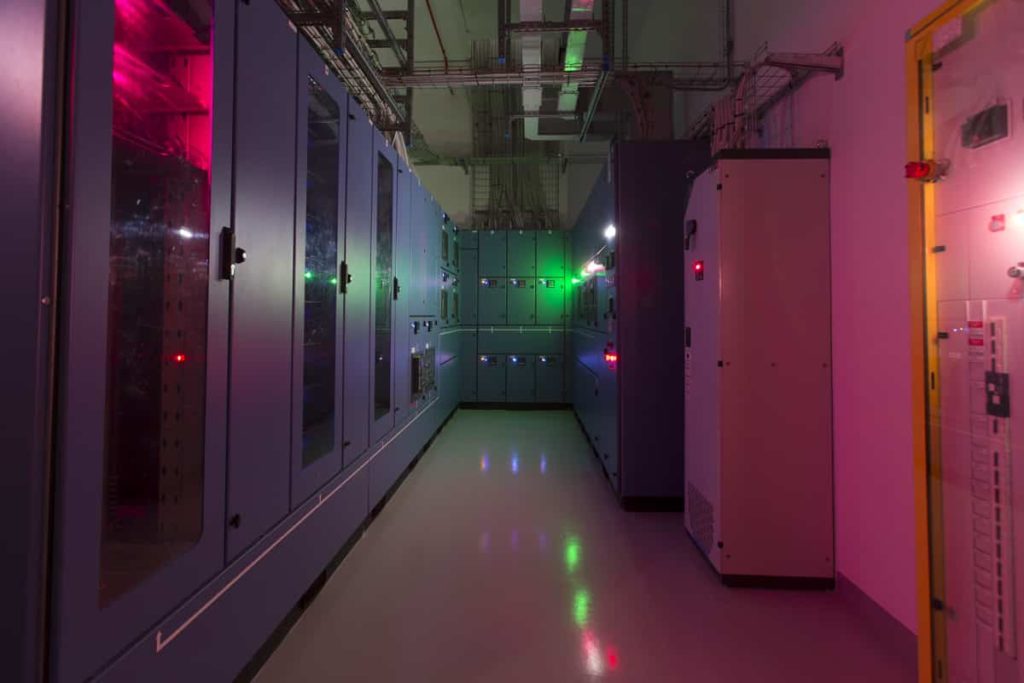
Data first travels through transport systems — WiFi or physical fiber networks — before reaching a building: the datacenter. Inside, fibers connect to physical servers. The datacenter includes both the servers and the building envelope with all the necessary technical systems: cooling, electricity, and safety devices enabling the servers to run 24/7 even in the event of a failure, ensuring that services remain available at all times for users.
What is your role as a datacenter operator?
At Data4, our role is to design and build the physical and technical environment that enables servers to operate efficiently and securely. We construct the building, integrate the critical infrastructure, and ensure the reliability of systems supporting power, cooling, and connectivity. Once this environment is ready, we rent space and electrical capacity to companies such as cloud providers and IT firms, which then install their own servers inside the rooms. Our business is not about managing data or applications; it is entirely focused on engineering, infrastructure, and operational excellence. We are a technical and industrial operator whose mission is to guarantee a high-performance environment enabling our customers’ technologies to function without interruption.
What are your major daily challenges?
Our daily challenges are primarily technical. To operate properly, a datacenter must benefit from a stable and continuous electrical supply, and it must maintain infrastructures capable of functioning even in the event of a grid failure. While Europe has the advantage of very high-quality electrical networks, this does not diminish the need for constant vigilance. All systems must be maintained in real time to guarantee that services remain operational 100% of the time.
Another major challenge is the availability of skilled professionals. The datacenter market has grown so rapidly in recent years that recruiting, training, and retaining qualified experts and technicians has become increasingly difficult. It is a relatively young sector, and the acceleration of demand has created a real shortage of specialized resources. Ensuring that teams remain competent and well-trained is therefore essential to meet the expectations and reliability standards of our industry.
And then, environmental challenges. Digital technology already accounts for 2 to 3% of global electricity consumption and 4% of the carbon footprint, with 16% of that coming from data centers. With the rise of cloud computing and AI, these figures are set to increase. At Data4, we launched a “Data for Good” program as early as 2020 to reduce our impact. We are working on energy efficiency (+25% over 5 years), reducing water usage through closed-loop systems, and setting ambitious goals: carbon neutrality by 2030 for our direct emissions (scopes 1 and 2) and a 38% reduction in scope 3, notably by limiting the impact of concrete in construction.
What will the datacenters of the future look like?
They will be larger, more integrated into electrical grids and cities, and co-developed with cloud actors. The size of datacenters is booming. A few years ago, buildings of 5 MW were typical; today, we talk about 60 MW — infrastructures three times larger.
This growth goes along with a greater integration into cities: for instance, Data4 works on heat recovery to supply eco-districts. Datacenters are becoming key players in urban and energy networks. We envision infrastructures capable of capturing and redistributing heat, using renewable energies, and drastically reducing their environmental footprint. The future of datacenters lies in innovation and collaboration to reconcile digital performance and ecological transition.
SWEN Capital Partners supports the growth of Data4 StableCo
SWEN Capital Partners supports the growth of Data4 StableCo, which groups a portfolio of datacenters located near Paris, Milan and Madrid. Nearly 90% of the capacity is secured by long-term contracts with Tech giants, ensuring stable and predictable revenues. The company holds a leading position in these European markets, with strategic sites in high-demand zones and growth driven by the explosion in cloud and AI needs. It also stands out in terms of sustainability, having incorporated these considerations since its creation in 2006 and set ambitious environmental goals.