Territorial utility: The foundation of sustainable performance
When discussing infrastructure as an asset class, the debate often centers on its financial qualities: stable income, decorrelation, and protection against inflation. While this perspective is valid, it overlooks a crucial aspect: infrastructure is, above all, equipment that shapes the economic and social life of a region. It has a lasting impact on access to energy, mobility, digital services, and essential services—the very foundation upon which regional competitiveness is built. It is precisely this dual nature—collective utility and relevance to investors—that makes infrastructure a unique asset class and forms the basis of SWEN Capital Partners’ approach to infrastructure.
Infrastructure at the heart of regional competitiveness
A region cannot develop without infrastructure. This is a long-standing reality, but one whose contemporary implications are constantly evolving:
- An efficient road or rail network opens up employment hubs, reduces logistics costs for local businesses, and attracts investment.
- Reliable access to energy determines a region’s industrial capacity.
- And more recently, it is the quality of digital infrastructure that determines a region’s ability to host high-value-added activities.
This link between network quality and economic attractiveness is not intuitive: it is measurable. Transportation is the number one criterion in companies’ decisions on where to locate, ahead of land costs or quality of life1. The World Economic Forum identifies it as the second pillar of national competitiveness, after institutions2, and France is now reaping the benefits. For the seventh consecutive year, it remains the top European destination for foreign investment3. But this leadership should not obscure very real areas of concern: in terms of the quality of its road network alone, France has fallen from first to 18th place4 worldwide since 2012—a decline that directly impacts its logistical competitiveness and serves as a reminder that an advantage built up over decades can erode in the absence of constant maintenance.
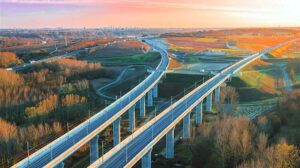
The effects of a well-targeted investment are also well documented : for every 7.7 billion euros invested, the Tours–Bordeaux high-speed rail line generated 1.96 euros of economic output for every euro invested5, and created an average of more than 10,000 direct and indirect jobs per year. LISEA, the line’s concessionaire through 2061, demonstrates how a public-private partnership can deliver high-quality infrastructure while reducing the share of public funding—51% compared to 75–100% for other French high-speed rail lines6.
Opening the market to competition amplifies this momentum: Velvet (a Proxima Group company), backed by Antin Infrastructure Partners with one billion euros, plans to simultaneously launch three lines starting in 2028 – Paris-Bordeaux, Paris-Angers-Nantes, and Paris-Rennes – adding ten million additional seats per year7.
The energy transition: A driver of local reindustrialization
Decarbonizing the economy relies heavily on infrastructure, and in doing so, it is reshaping Europe’s economic geography. This shift does not benefit only major metropolitan areas or existing industrial zones. It creates economic activity in rural or outlying areas that had benefited little from previous economic cycles. The deployment of renewable energy—wind, solar, and biomethane—generates local jobs, tax revenue for local governments, and royalties for landowners in these areas.
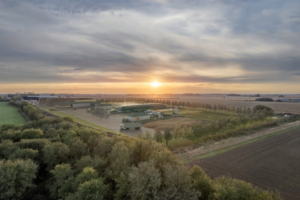 GMT, a biomethane platform supported by SWEN CP, is a concrete example of this: sourcing agricultural residues from within an average radius of 50 kilometers around each anaerobic digestion facility, it transforms these residues into renewable gas fed into the local grid, while the resulting digestate is returned to the fields as organic fertilizer. Farmers gain a source of supplemental income, and the region gains energy self-sufficiency, without depending on international markets or geopolitical uncertainties.
Energy storage embodies another facet of this regional dynamic. Batteries, hydrogen, and smart grids are only useful near points of production and consumption: by their very nature, these are infrastructures that are rooted locally rather than circulating on a global market. The same principle applies to energy recovery from waste through anaerobic digestion, which can only exist in close proximity to the agricultural or industrial areas that supply it.
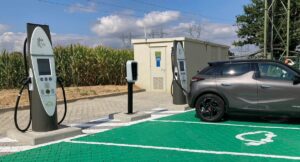 NW Storm reflects this logic of dual regional anchoring: the company combines battery-based electricity storage units—the JBoxes—with high-power charging stations located primarily in rural and suburban areas. This model simultaneously addresses two needs: stabilizing the local power grid and making electric mobility more accessible where it is most lacking.
Mobility as a prerequisite for economic participation
Connecting major cities and decarbonizing urban mobility: these are real challenges. But they overlook a less visible issue—that of regions that decades of underinvestment have gradually isolated. Yet well-targeted investment can reverse this trend, even in densely populated urban areas. Line 5 of the Nice Côte d’Azur Metropolitan Area tram system is a concrete example of this: 16,000 vehicles taken off the road every day, 2,000 metric tons of CO₂ avoided per year8. And beyond the carbon footprint, it serves a population of 50,000 within 25 minutes—a journey that used to take significantly longer by car.
Investment in sustainable mobility – bike routes, multimodal transit hubs, charging infrastructure, and line upgrades – addresses this reality. It reduces the forced reliance on private cars, which currently affects 86% of French people for their daily commutes8, one of the highest rates in Europe.
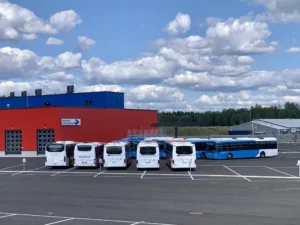 Supported by SWEN CP, Koiviston Auto is a prime example of this: with nearly 300 electric buses already in service across the country and more than 50 new units expected in 20269, Finland’s leading bus operator is tangibly transforming the region’s mobility habits. In doing so, it is reducing emissions and dependence on fossil fuels, without sacrificing accessibility to the areas it serves. Physical mobility alone, however, is not enough: in a digital economy, the quality of connectivity determines what a region and its residents can access.
Digital infrastructure: As critical as water or electricity
The deployment of fiber-optic networks, 5G networks, and data centers determines a region’s economic attractiveness, access to digital public services, and the ability of local small and medium-sized enterprises to go digital. The evolution of coverage in France illustrates the scale of what ten years of public efforts can achieve: in 2013, only 45% of households in rural areas had broadband coverage; by 2024, more than 90% of the country is now eligible for fiber10. This rollout has helped sustain economic activity in isolated areas, made telemedicine and distance learning accessible, and encouraged businesses to set up shop outside major cities.
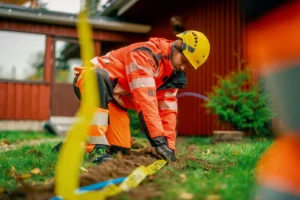 Valokuitunen, a Finnish fiber-optic network in which SWEN CP has invested, embodies this approach precisely: its explicit mission is to bridge the digital divide by deploying fiber to neighborhoods and villages previously neglected by private operators. Behind the infrastructure lies the long-term economic viability of an entire region.
Data centers complement this network: though less visible than fiber, they are no less essential. They are what store, process, and transmit the bulk of the data carried by these networks. Their increasing presence in suburban areas also shapes a region’s economic appeal.
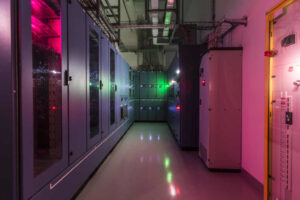 The company Data4 is the most tangible example of this: established in three strategic European markets—Paris, Milan, and Madrid—this portfolio of data centers hosts the data of French and European businesses. Its sites redistribute the heat generated by their servers to surrounding buildings in the form of district heating. In doing so, it contributes, physically, to the life of the region that hosts it. But this territorial equity must also extend to access to everyday amenities.
Social infrastructure: A major challenge for regional revitalization
Often overshadowed by energy or transportation, the category of “social infrastructure” encompasses essential services: healthcare facilities, retirement homes, transitional housing, and educational and cultural amenities. These assets address well-documented demographic needs—such as an aging population and growing pressure on public healthcare systems—and their utility is not dependent on economic cycles.
Access to quality healthcare, educational institutions, or appropriate housing solutions determines the opportunities available to individuals throughout their lives. When these facilities are absent or insufficient, disparities between regions widen and produce measurable effects. More than half of France’s rural municipalities are currently underserved by general practitioners, compared to about a quarter of urban municipalities. Multidisciplinary health centers, which bring together several practitioners at a single location, are one solution to this exodus of medical professionals: since 2010, several hundred have been funded in rural areas, with a measurable effect on the long-term retention of doctors, who are more inclined to set up practice in a shared setting than in isolation11.
The same logic applies to educational facilities. SWEN CP indirectly holds a stake in a university campus developed as part of a public-private partnership (PPP) with the city of Vienne. This type of asset exemplifies social infrastructure in its strictest sense: the contracting authority is a government, operations are secured by a 25-year concession contract, and financial resilience is backed by the creditworthiness of the public authority.
1. Ancoris-SCET Barometer, 2023. 2. World Economic Forum, Global Competitiveness Report. 3. EY, France Attractiveness Barometer, 2026. 4. World Economic Forum, Global Competitiveness Report. 5. National Federation of Public Works, “Infrastructure at the Heart of Regional Competitiveness”. 6. LISEA – Concessionnaire of the South Europe-Atlantic High Speed Rail Line. 7. velvet.fr website. 8. FNational Federation of Public Works, “Infrastructure at the Heart of Regional Equity”. 9. Cap Infra press release, February 23rd 2026. 10. Arcep, Network Deployment Observatory. 11. DREES, Doctors in Multidisciplinary Health Centers: Rising Incomes and Pormising Effects on Access to Care”, 2021