As pressure on water resources intensifies and the need to modernize networks grows, water infrastructure—which has so far been sidelined in funding allocations—is expected to play an increasingly important role in long-term infrastructure funding. Resilience, visibility of cash flows, structural investment needs, and a direct contribution to adaptation challenges: for SWEN CP, this combination makes water a strategic component of sustainable infrastructure for the years to come, and this is precisely where the opportunity lies.
A resource under pressure, a sector lagging behind
Climate change is profoundly reshaping the water cycle: intense winter precipitation, prolonged summer droughts, and disruptions to ecosystems and consumption patterns. Compounding this instability are growing tensions between competing uses—agriculture, industry, and domestic use—which are putting pressure on a resource whose availability was previously taken for granted.
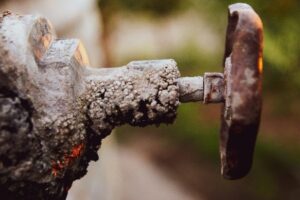
This water stress is compounded by a structural lag in investment. In Europe, a significant portion of the distribution networks was built several decades ago and requires large-scale modernization programs. In some countries, losses due to leaks can still account for 20 to 30% of distributed water¹. The lag in water reuse is equally striking: in France, less than 1% of water is reused, compared to about 7 to 13% in Spain².
The gradual tightening of environmental standards and European climate resilience targets will automatically accelerate investment needs, which are expected to reach 140 billion euros by 2030.
Data centers: A conflict of use to be taken seriously
While water distribution and treatment are at the heart of our thesis, water resource management is in fact an issue that permeates the entire economy.
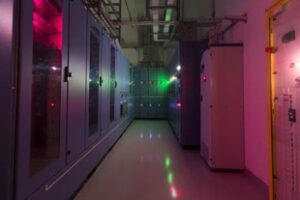 The rise of the cloud and artificial intelligence—particularly data centers—has made them one of the major emerging consumers of water. Open-loop server cooling can place significant pressure on local water resources, creating conflicts over water use among industrial, agricultural, and residential stakeholders.
A report by Nature Finance (February 2025) indicates that 45% of data centers are located in river basins at high risk in terms of water availability.
Therefore, operators’ ability to optimize their water consumption, adopt closed-loop cooling systems, and integrate recycling solutions is becoming a key differentiator, both in terms of local acceptance and financing. At SWEN CP, when we work with digital sector players, managing the water footprint is an integral part of our analysis. Investing in the digital sector and investing responsibly with regard to water are not mutually exclusive—provided one looks closely at the issue.
Two complementary investment theses
For local governments—particularly small and medium-sized municipalities—financing and managing these investments has become difficult without the support of specialized partners. This gap between the scale of needs—in terms of both investment and technical expertise—and public capacity is one of the main drivers behind the gradual opening of the sector to long-term infrastructure investors. At SWEN CP, we identify two particularly attractive segments:
- The first is the municipal segment. Delegating operations to private operators through concession or lease models represents a growing opportunity for investors capable of providing expertise and patient capital over the long term. In France, 75% of water management services are provided by private entities³.
- The second is what we call “Water as a Service” (WaaS) for industrial companies. Sectors such as agri-food and pharmaceuticals consume considerable volumes of water in their processes, even though water management is not their core business. Outsourcing the management of these infrastructures allows them to free up capital and refocus on their core business. For investors, this translates into long-term contracts, precise specifications, and a diversified asset base.
At the heart of these two investment themes lies a common challenge: water reuse. Across Europe, only 1 billion m³ of treated wastewater is reused each year4. Transitioning from a linear model to a near-closed-loop system is both an environmental necessity and a driver of value creation.
Our conviction, illustrated by our investments
Our conviction regarding the water sector is based on a combination of factors rarely found together in other infrastructure segments:
- By their very nature, water assets generate predictable cash flows, backed by long-term contracts and a diversified customer base.
- In the concessions segment, pricing is structurally indexed to keep pace with or exceed inflation, offering natural protection for returns over the long term.
- Added to this is favorable market momentum: investment needs are accelerating, and growth opportunities have been widely identified.
We have been putting this thesis into practice for several years through concrete investments.
We have been supporting SAUR, France’s third-largest water distribution and treatment operator, alongside the Swedish-based fund EQT Infrastructure since 2018. With a nationwide presence and a particularly strong position in small and medium-sized municipalities, SAUR perfectly illustrates our conviction in the municipal segment.
Committed to a long-term strategy called Mission Water 2030, SAUR carried out two successive issuances of blue bonds in 2024 and 2025—the most recent of which was for 500 million euros5—to finance the modernization of its infrastructure, reduce network losses, and promote wastewater reuse.
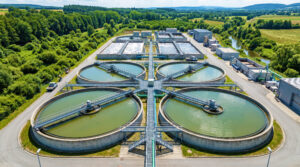 We also partnered with Quaero Capital, a European fund specializing in mid-cap infrastructure, on a secondary transaction targeting a diversified portfolio of water-related assets. This portfolio includes several French and Spanish companies and covers the entire value chain, from municipal services to industrial water.
1. French Office for Biodiversity (OFB) / European Commission, Water Resilience Strategy, June 2025. 2. Ministry of Ecological Transition / European sectoral data. 3. Pwacs Commercial Due Diligence Report. 4. Water Europe UPW cost savings: KTH Royal Institute. 5. Press release Saur, 29 september 2025